
It's time to prototype
With the advent of vibe-coding, time to prototype has gone from weeks to seconds but will that actually make us more successful as product professionals?

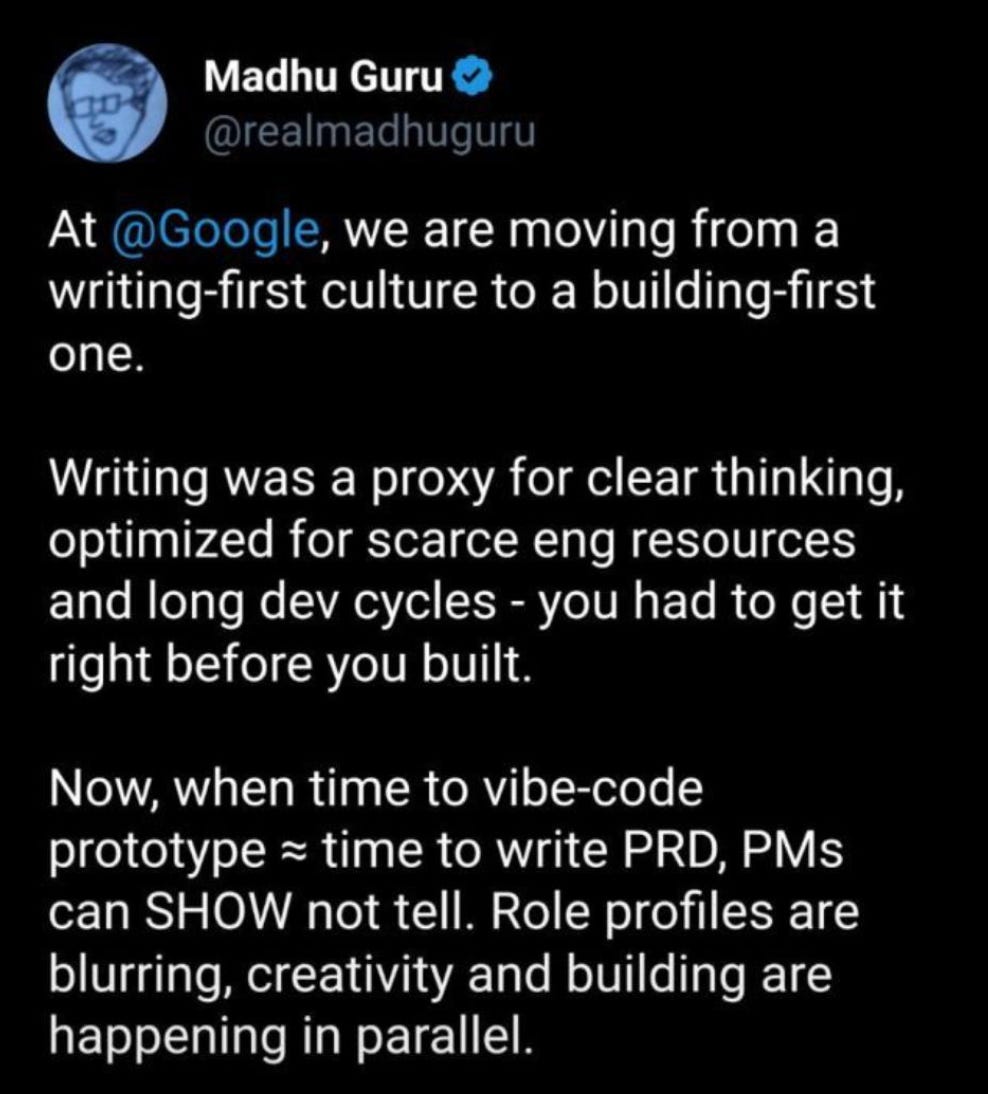
A hot take shared a while ago has stirred up a lot of commotion within the product community. Is it really that spicy? Why are folks reacting so much? Could this paradigm shift be a good thing? Or… dangerous?
Let’s dive in.
In this article, I would like to explore the rise of what’s being called the “vibe-code prototype.” To unpack this, I’ll start with a few history lessons from my early days as a product designer. Then I’ll walk through the potential pitfalls of vibe-code prototyping. And I’ll end with the opportunities I think are right in front of us.
But first, let’s talk about why we prototype in the first place.
Why we prototype
As humans, we have a hard time connecting words that describe an experience with the actual experience itself. A prototype often says more than a thousand words.
Instead of writing what should be made and waiting weeks or months to see it come to life, you can build a prototype that mimics the intended solution. It’s quick. It’s cheap. And it helps you learn.
You use a prototype, as part of product discovery, to answer questions like:
Will they buy it? [value risk]
Will they be able to use it? [usability risk]
Can we build it? [feasibility risk]
Will it work for the business? [viability risk]
In essence, prototypes are tools for learning. You use them to test with users or customers, align your team, and communicate with stakeholders.
A short history of prototyping of the last 20 years
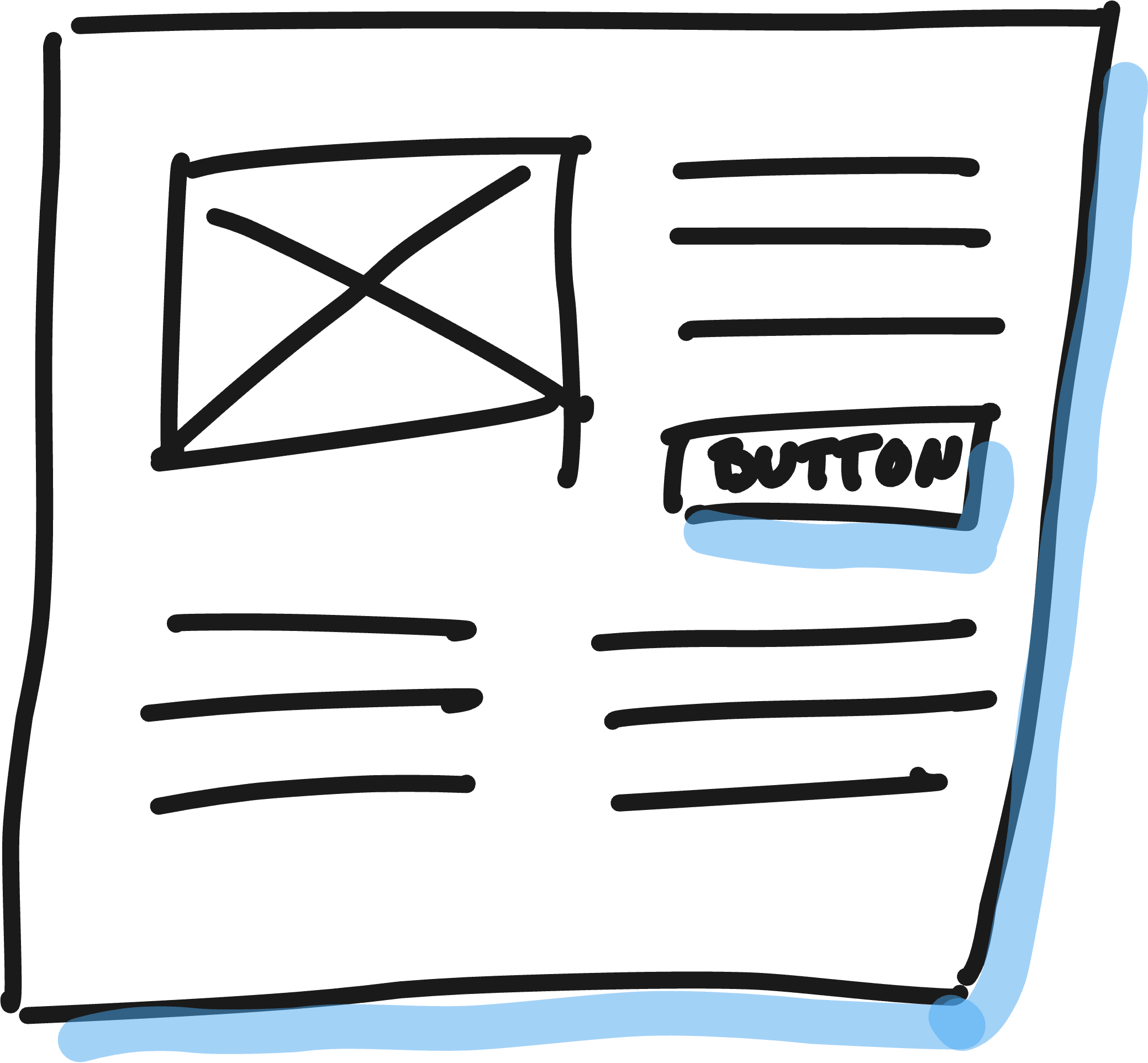
The early days: wireframes
Realistic? Not really
Time to prototype? Weeks (or maybe never?)
When I started out as a UX designer in the late-2000s, the tools available were OmniGraffle, Balsamiq, or something from the Adobe Suite. I’d design wireframes to show the structure of a page and how different elements should link together. Then I’d hand off specs to visual designers and developers.
If you were lucky enough to work with a collaborative developer, you might’ve been able to create a front-end prototype to test with users. But that usually meant a lot of manual work and tedious linking. It wasn’t fast, and it definitely wasn’t straightforward.
The clickable prototype era
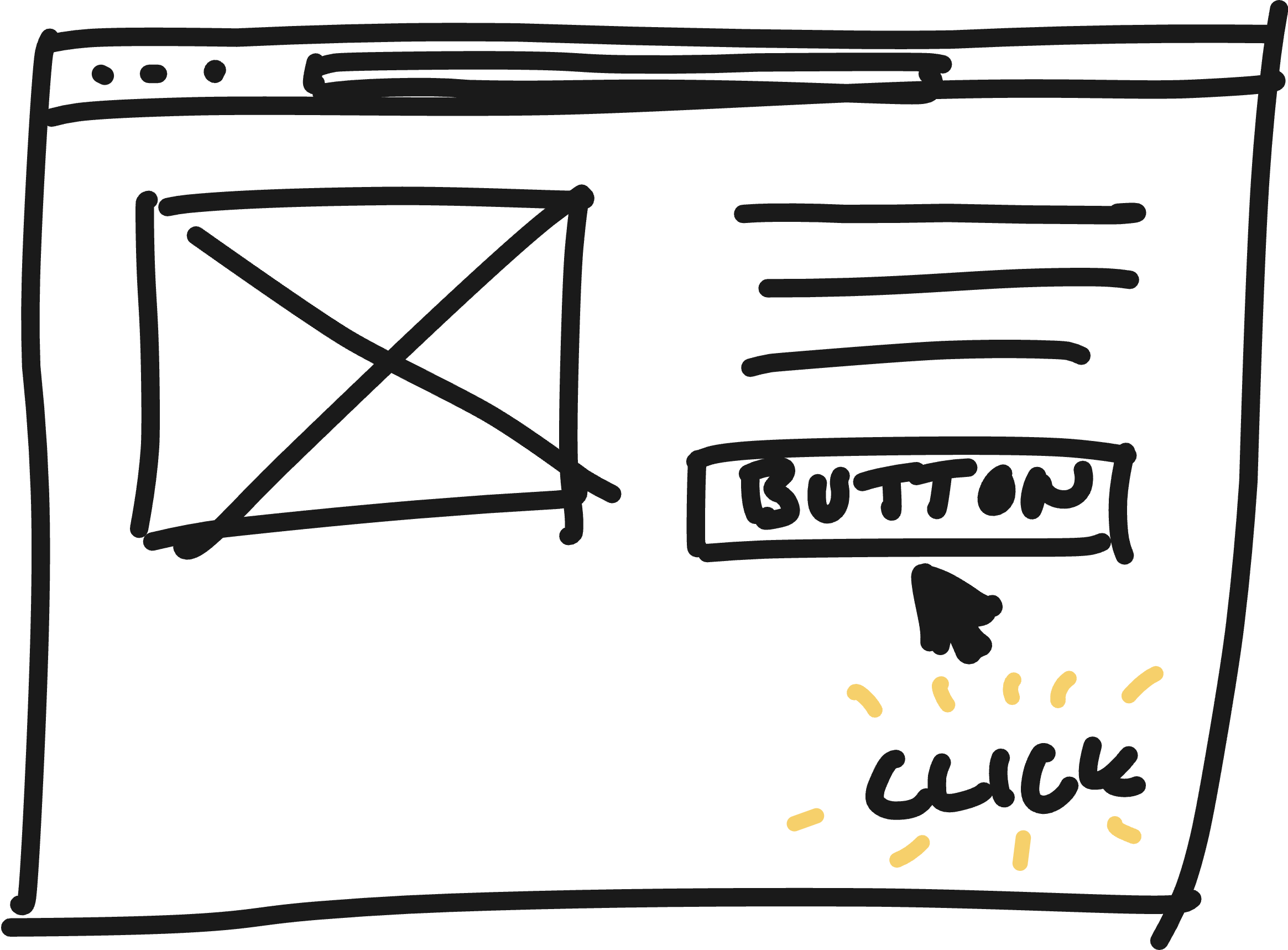
Realistic? Not really
Time to prototype? Days
In the early 2010s, “Axure” became the go-to. With the tool, you could finally create interactive prototypes without involving a developer.
That was a big step. As a UX designer, you could mock up user flows and simulate logic. But Axure was heavy. You had to manually build out "if" cases and manage complex states. If you weren’t careful, it could take just as long as building the real thing in code.
Sketch and InVision came together
Realistic? Almost
Time to prototype? Hours
Around ten years ago, Sketch and InVision made prototyping way more accessible. You’d design a screen in Sketch, export it to InVision, and build a clickable prototype in a matter of hours.
It was also the first time you could really leverage a design system. UX designers were empowered to use visual guidelines and create prototypes that reflected the company’s design language. As a result, wireframes and low-fidelity sketches became less of a focus.
And, then there was Figma
Realistic? Pretty close
Time to prototype? Minutes
With Figma, everything got faster and more lightweight. Design and prototyping happened in one tool. No more exporting. Everything lived in the browser. And collaboration between design and development became much tighter.
Design systems also became even more powerful. You could drag and drop buttons, typography, and components. It was consistent, reusable, and fast. You could move from a sketch to an interactive prototype in minutes.
Now: the vibe-coding era
Realistic? Totally. It’s real code
Time to prototype? Seconds
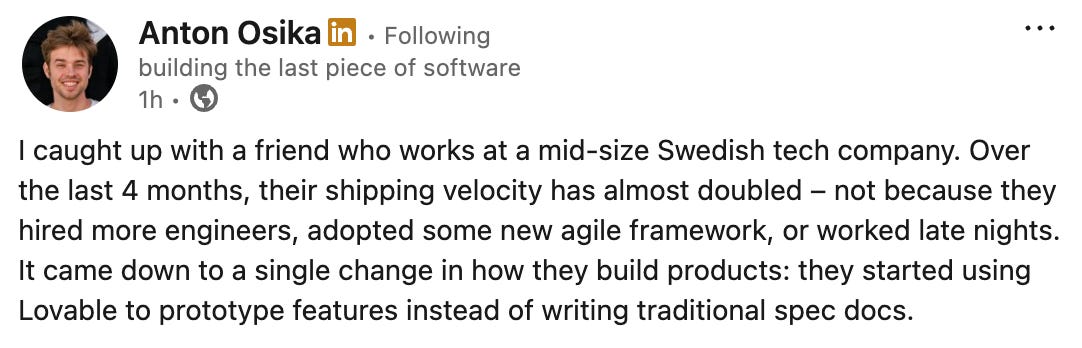
Now we’re seeing something very different. Tools like Lovable and Magic Patterns let you generate prototypes in seconds using plain language. You enter a prompt like “create a sign-up flow for a Fintech company,” and get back a best-practice onboarding experience in real-world code.
You just describe what you want: the flow, the context, the user journey, and so on. Then the tool builds something that looks and feels pretty decent. No more design, just a prompt.
But let the word “decent” sink in for a bit.
With vibe-code prototyping, we’ve gone from weeks to seconds in just 20 years. Instead of spending hours or days designing an interface, browsing for inspiration, and assembling components from a design system, you can now describe what you want using words.
But the big question is: are words enough?
Nope.
The potential pitfall with vibe-coding prototypes
Prototyping is just one piece of the puzzle when it comes to building a great product. Best practices and "decent" won’t cut it in the age of AI sludge.
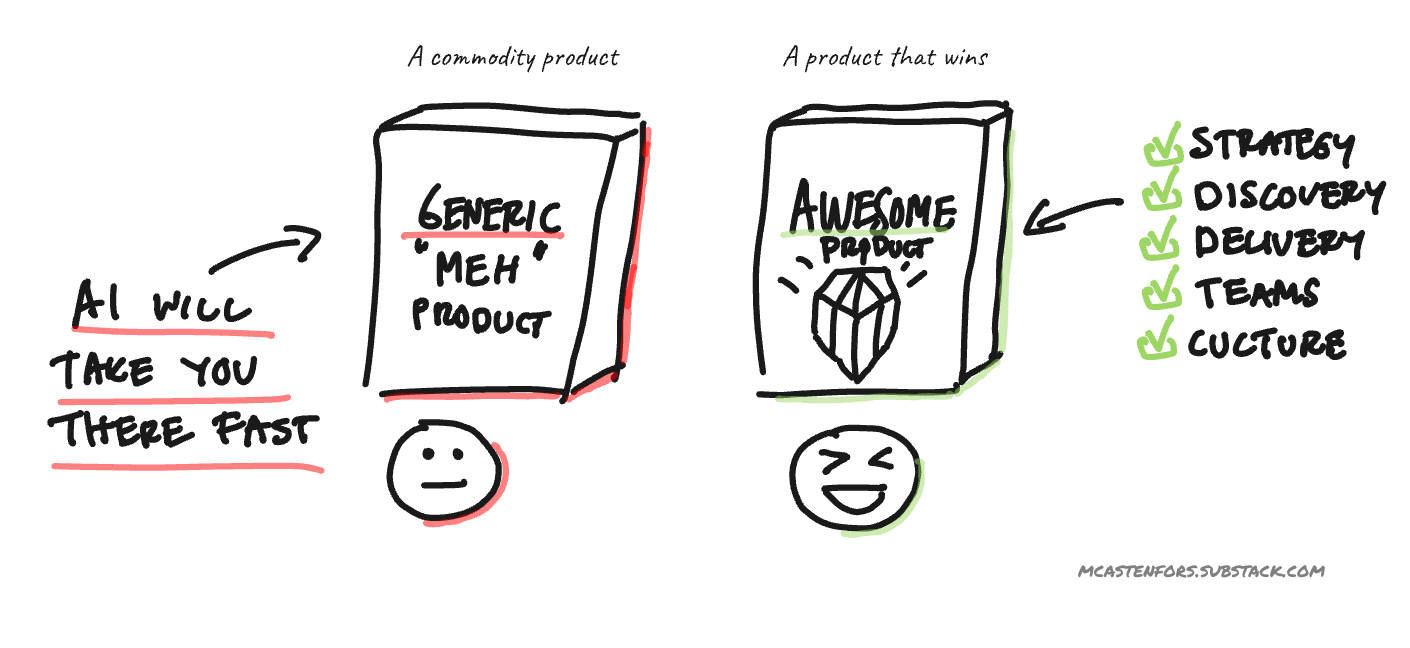
If you want to create something that delights, that stands out, that goes above and beyond expectations, you can’t rely solely on AI or vibe-coding to get you there.
You need to focus on the craft of product. That means paying attention to thousands of small decisions through thinking, discussing, ideating, iterating, designing, tweaking, debating, and sketching.
“To find ideas, find problems. To find problems, talk to people.”
-Julie Zhou
It means answering questions like:
Is this a valuable problem to solve for users and customers? [Strategy]
Have we tackled the risks of building the wrong thing? [Discovery]
Can we bring it to life in a sustainable, performant, secure, and compliant way? [Delivery]
Do we have the right team with the right skills to make it happen? [Teams]
And do we have a product culture that supports this new way of working? [Culture]
These questions are just the tip of the iceberg.
The vibe-code prototype can be a powerful way to bring solution ideas to life. But these prototypes still need care, attention, and collaboration to become something that truly exceeds customer expectations.
Let me quote Steve Jobs from The Lost Interview:
It’s the disease of thinking that a really great idea is 90% of the work, and that if you just tell all these other people, “Here is this great idea,” then, of course, they can go off and make it happen.
And the problem with that is that there is just a tremendous amount of craftsmanship in between a great idea and a great product.
And as you evolve that great idea, it changes and grows. It never comes out like it starts because you learn a lot more as you get into the subtleties of it, and you also find there is tremendous tradeoffs that you have to make. […]
Designing a product is keeping 5,000 things in your brain, these concepts, and fitting them all together and continuing to push to fit them together in new and different ways to get what you want.
And every day you discover something new, that is a new problem or a new opportunity to fit these things together a little differently.
To me, that captures the essence of the craftsmanship of product.
If you carry that mindset and lean into the practices that stand the test of time: empathizing deeply with customers, solving their problems, telling stories, experimenting, learning, designing, collaborating, and building on each other’s strengths, you’ll create products that stand out, faster, with the help of AI and vibe-coding.
But if you focus only on the vibe-coding part and settle for “decent” or “good enough,” AI won’t make you more successful. In fact, it might do the opposite.
Treat AI and vibe-coding as a way to speed up learning. Use them as one part of a thoughtful, deliberate way of working toward building fantastic products. As a result, you’ll unlock their true potential.
It’s really a new beginning.
It’s time to prototype.